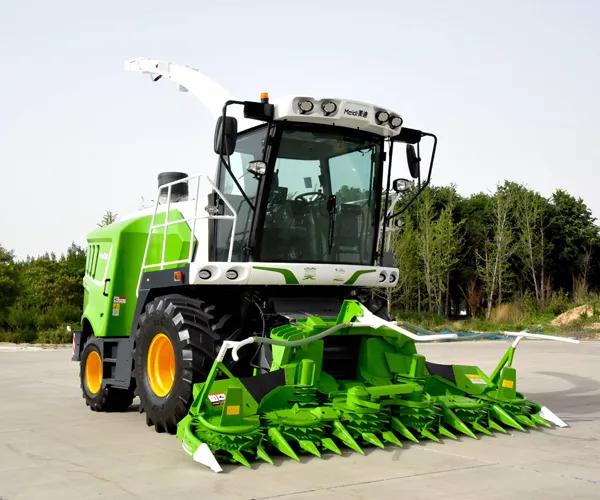
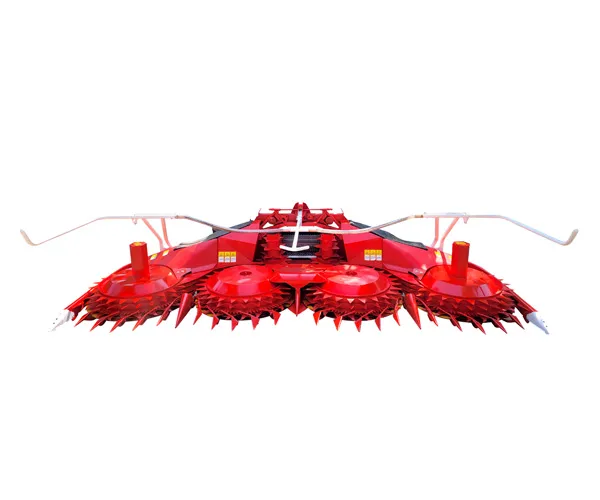
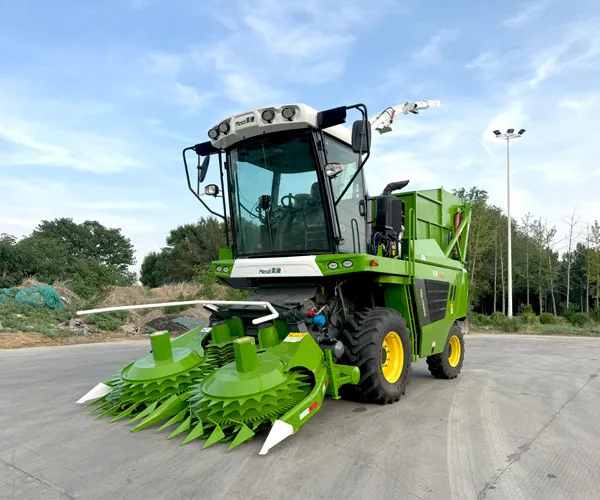
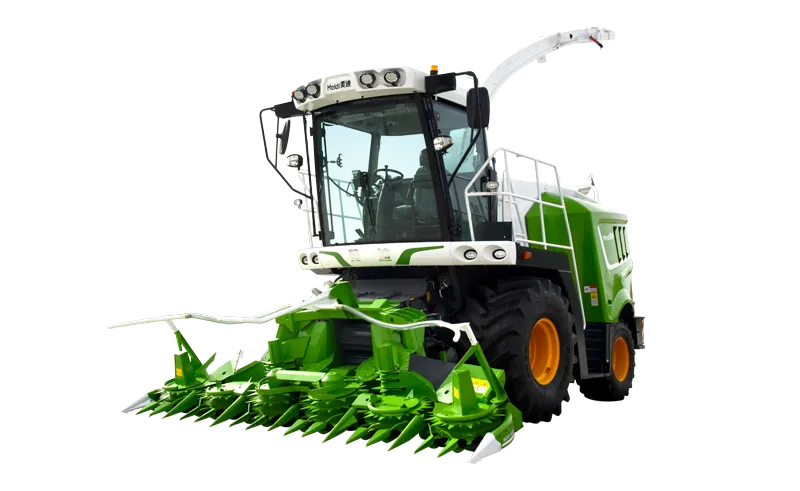
A self-propelled forage harvester is a specialized machine designed to harvest forage crops and prepare them for silage or livestock feed. It cuts, chops, processes, and discharges the crop in one continuous operation, making it a practical solution for large farms and silage contractors that need high efficiency during a short harvest season.
Compared with pull-type equipment, a self-propelled machine has its own engine, cab, drive system, feeding system, chopping system, and discharge system. This gives it greater field independence and makes it better suited to large-scale harvesting work where timing, output, and feed quality all matter.
At Meidi, we design forage harvesting machinery for practical field conditions, helping customers achieve reliable performance season after season.
What Is a Self-Propelled Forage Harvester?
A forage harvester is used to harvest crops such as corn, grass, haylage, and green fodder. A self-propelled forage harvester completes this work with an integrated power and harvesting system, rather than relying on a tractor to pull and power the machine.
In operation, the crop is cut or collected, drawn into the feeding system, chopped by the cutterhead, processed through the machine, and blown into a transport vehicle. For corn silage, kernel processing is especially important because properly processed kernels can help improve feed utilization.
Why Large Farms Use Self-Propelled Forage Harvesters?
Large farms use self-propelled forage harvesters because forage harvesting is highly time-sensitive. Corn silage, grass silage, and haylage must be harvested at the right stage and moisture level. If the harvest is delayed, feed quality can decline, and part of the season’s value may be lost.
Higher Daily Harvesting Capacity
Large farms often need to cover a large acreage in a short harvest window. A self-propelled machine combines power, mobility, cutting, chopping, and discharge in one unit, helping field teams work faster and more efficiently.
Higher daily capacity is not only about finishing sooner. It also helps reduce weather risk, avoid overmature crops, and keep silage schedules under better control.
Better Control of Silage Quality
Silage quality depends on several factors, including chop length, kernel processing, crop moisture, packing density, and storage management. The harvester does not control every part of the silage process, but it plays a major role in preparing the crop.
A stable chopping system helps produce more uniform forage. Good crop flow reduces uneven feeding and blockages. Effective kernel processing improves the feeding value of corn silage. Together, these factors make the material easier to compact and more consistent for livestock feeding.
Less Pressure on Labor and Tractor Resources
With a self-propelled system, farms do not need to rely on a tractor as the main power source for harvesting. This frees tractors for hauling, packing, transport, or other field tasks.
During peak season, labor and equipment coordination can become one of the biggest challenges on a large farm. A self-propelled forage harvester helps simplify field organization and reduce delays.
Practical Value for Silage Contractors
For silage contractors, the harvester is not just equipment. It is the core machine behind customer service and seasonal revenue.
A dependable self-propelled silage harvester helps contractors serve more customers, stay on schedule, and protect their reputation. When the machine delivers stable output and less downtime, it supports both short-term income and long-term customer trust.
Core Systems That Decide Machine Performance
When evaluating a self-propelled fodder harvester, buyers should look beyond horsepower alone. Power is important, but field performance depends on how well the whole machine works as a system.
Engine and Drive System
The engine must provide enough power and torque for dense crops, uneven field conditions, and long working days. A stable drive system helps the operator maintain steady movement and better control in the field.
For large farms and contractors, this directly affects daily output and operator confidence. When a machine struggles under load, the whole harvest process can slow down.
Feeding and Chopping System
Good crop flow is essential for consistent harvesting. If the feeding system is unstable, the machine may produce uneven chop length or experience blockages.
A well-designed chopping system helps maintain clean cuts and consistent material size. This supports better silage packing, more uniform feeding, and smoother operation throughout the day.
Kernel Processing System
For corn silage, kernel processing deserves close attention. If kernels remain too whole, livestock may not fully use the starch in the feed.
A strong kernel processing system helps improve the value of harvested corn silage by breaking kernels more effectively. For dairy and beef operations, this can support better feed consistency and nutritional use.
Maintenance and Operator Access
Harvest season does not leave much room for complicated maintenance. Features such as automatic knife sharpening, automatic lubrication, accessible service points, and clear operating controls can help reduce downtime.
Self-Propelled Forage Harvester vs Pull-Type Machine
A pull-type forage harvester can be a practical choice for smaller farms, especially where acreage is limited and an existing tractor can provide enough power. It is often suitable when daily output requirements are moderate and the harvest window is less demanding.
A self-propelled forage harvester is usually selected when the farm needs higher capacity, stronger field independence, and more efficient operation during a short harvest season. It is especially suitable for large dairy farms, cattle farms, commercial silage operations, and machinery service providers.
The right choice depends on farm size, crop type, terrain, labor availability, budget, and service expectations. The biggest machine is not always the best choice. The best machine is the one that matches the customer’s real working conditions and can deliver reliable results year after year.
For agricultural machinery dealers, this distinction is important. Customers may ask for a self-propelled machine because they want more capacity, but they still need guidance on model selection, spare parts, operation training, and maintenance planning. A professional recommendation helps avoid mismatched purchases and builds stronger long-term relationships.
| Item | Self-Propelled Forage Harvester | Pull-Type Forage Harvester |
| Power source | Built-in engine and drive system | Powered and pulled by a tractor |
| Field independence | High | Depends on tractor |
| Daily capacity | Higher | Moderate |
| Best for | Large farms, contractors, commercial silage work | Smaller farms, limited acreage |
| Harvest efficiency | Very high | Suitable for lighter workloads |
| Labor coordination | Easier during peak season | Requires tractor availability |
| Initial investment | Higher | Lower |
| Maintenance planning | More specialized | Simpler in some cases |
| Typical use | Large-scale, time-sensitive harvest | Smaller or mid-sized operations |
Conclusion: Built for Efficiency, Feed Quality, and Long-Term Value
A self-propelled forage harvester is more than a harvesting machine. For large farms and silage contractors, it is a complete forage-processing solution that supports speed, consistent crop flow, feed quality, and reliable seasonal performance.
For farm owners, the value comes from finishing harvest on time, reducing field delays, improving chopping consistency, and preparing better material for silage. For dealers and agricultural machinery agents, a reliable self-propelled harvester line can create long-term business value through customer confidence, spare parts demand, service opportunities, and repeat cooperation.
At Meidi, we focus on practical, durable, and high-performance forage harvesting machinery for real farm conditions. Whether the crop is corn silage, grass, haylage, or green fodder, the goal remains the same: harvest efficiently, protect feed quality, and create long-term value.
FAQ About Self-Propelled Forage Harvesters
Q1: What does a self-propelled forage harvester do?
A self-propelled forage harvester cuts forage crops, feeds them into a chopping system, processes them into short material, and discharges the chopped crop into a trailer or truck. It is commonly used for silage production and livestock feed preparation.
Q2: Why do large farms prefer self-propelled forage harvesters?
Large farms prefer self-propelled machines because they offer higher daily output, better field independence, more stable crop processing, and greater efficiency during short harvest windows.
Q3: Is a self-propelled forage chopper suitable for corn silage?
Yes. A self-propelled forage chopper can be suitable for corn silage when it has reliable feeding, chopping, and kernel processing systems. For corn silage, kernel processing quality is especially important.
Q4: How should dealers choose the right self-propelled forage harvester model?
Dealers should evaluate local crop types, farm size, terrain, expected daily capacity, customer budget, spare parts availability, and after-sales support needs before recommending a model.
Bonnie
Bonnie creates content that bridges agriculture and technology. With a background in agronomy, she focuses on user-centered insights and real-world solutions to help farmers optimize their daily operations.